 Biology
41
Biology
41
Evolution
 Biology
41
Biology
41
This section focuses on an
introduction to evolution and natural selection with an emphasis on macroevolution.
![Charles Darwin [1809-1882]](darwin.gif) Charles
Darwin
Charles
Darwin
![Alfred Russel Wallace [1823-1913]](wallace[1].gif) Alfred
Wallace's work and
travels; co-discovered the theory of natural selection (selections
of his work). As a naturalist Wallace travelled extensively through
the Neotropics as well as the Malayan Archipelago. These years are well
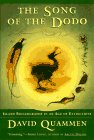
described in the first part of David Quammen's book "The
Song of the Dodo". He independently developed the mechanism for evolution
based on his extensive observations of the natural world.
Alfred
Wallace's work and
travels; co-discovered the theory of natural selection (selections
of his work). As a naturalist Wallace travelled extensively through
the Neotropics as well as the Malayan Archipelago. These years are well
described in the first part of David Quammen's book "The
Song of the Dodo". He independently developed the mechanism for evolution
based on his extensive observations of the natural world.
Evidence for Evolution:
1. Taxonomy and Systematics:
Classification
of organisms leads to "natural" groups. What degree of evolutionary relatedness
can be associated with these groups?
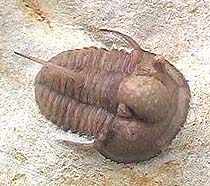
2. The Fossil Record
definition
formation of fossils
record of past life
some species
dominate (linked to..
hard parts present (bone/shell)
habitat (oceans, close to wetlands, rivers)
abundance (high population)
distribution (large area)
prevalence in time (all species go extinct - the longer a species exists
the more likely they will be part of the record)
(In addition: consider surviving geological destruction and being found)
The fossil record of horses
change
in size, toes, teeth
climate
changes?
Changes in the fossil record
of animals over time
Role of Extinctions
3. Comparative Anatomy
Biologists compare different
anatomical features of organisms.
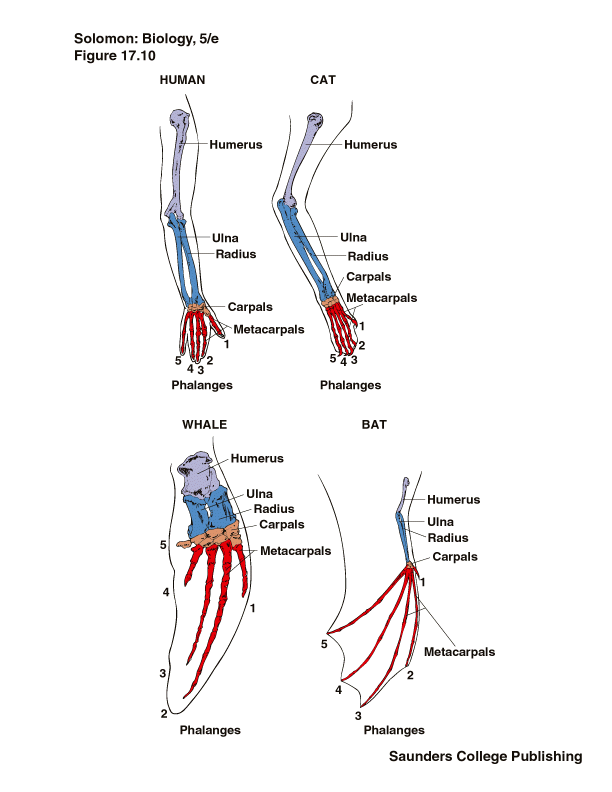
Example: homologous
structures
e.g. limbs
of birds, humans, porpoise, reptile and a bat
Functions
are different but the structures have the same evolutionary origin.
Analogous Structures
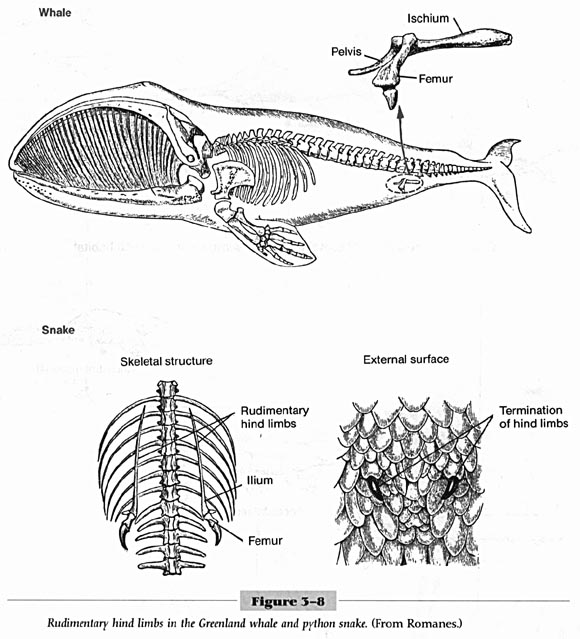
Vestigial Structures (e.g.
in the skeletons of the Greenland
whale and the python snake
one can still find the rudiments of limbs).
4. Comparative Embryology
Comparing the early development
of organisms.
Study the images
of the early development of several classes of the vertebrates. These embryos
are very similar at early stages but quite different as development proceeds.
E.g. gill arches present in
all of them at an early stage. Why? In a fish these structures are part
of the gills while in a human they become part of the middle ear. Why do
they form during the early stages?
These organisms
seem to follow the same developmental sequence during the early stages
but take their own unique path as time goes on. The developmental process
has been modified by evolution. The similarities during the early stages
point to common descent, i.e. the vertebrates have a common ancestor about
500 million years ago.
5. Biogeography
The study of the distribution
and abundance of life forms. Understanding historical geography is crucial
for being able to explain the current distribution of organisms as well
as the presence of fossils of life from the past.
Plate
tectonics
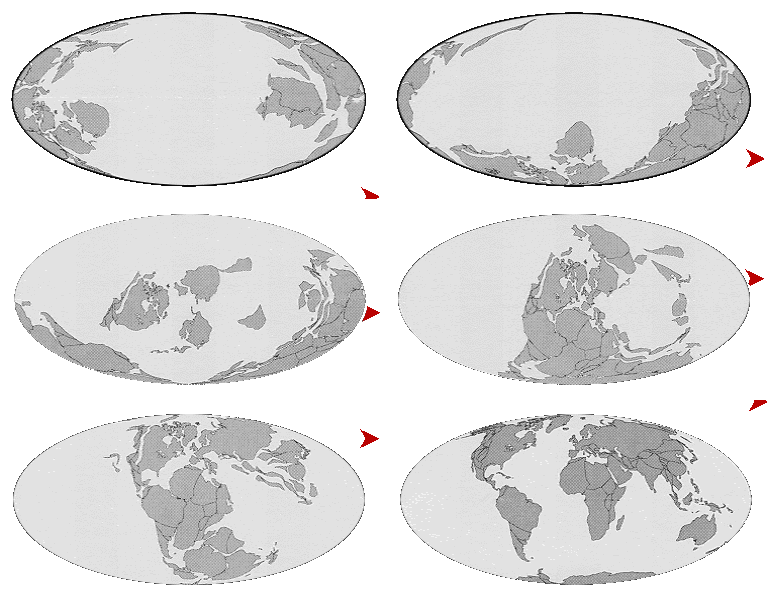
The continents move (continental
drift)
Film
showing the movement of the continents over the last 700 million years.
The global geography has shifted
drastically over this time.
As a biologist it is important
to consider the geography of the past to be able to understand the current
distribution of species on the planet.
6. Molecular Biology
[Note: Darwin had no knowledge about genes
and DNA even though he was aware of the fact that traits were passed down
through time from parents to offspring).
The sequencing and comparison
of DNA has become a powerful tool in terms of understanding the evolutionary
relatedness between different species.
Certain important genes are
relatively stable and change very slowly over time. This phenomena is referred
to as the molecular clock. By comparing the changes that have occurred
in the genes between different living species we gain knowledge about the
time that has passed since these organisms had a common ancestor. The more
similar the sequences the closer the connection in time.
Graphs showing the similarities
between major taxa of organisms.
The Mechanism: Natural Selection
Definition
Discussion of artificial selection
e.g. the
mustard plant family
e.g. dogs
Acts on the genetic variation
in a population.
Differential reproductive
success
Example of natural selection:
Biston
betularia (The Peppered Moth) - Industrial melanism in England.
The link
between lichens and air pollution
Gray and
Black Morphs in the population of moths.
Normally
the gray one dominates due to the camouflage provided by lichen covered
tree trunks.
Loss of
lichen due to air pollution leads to a predominance of the black variety
of the moth.
The trend
has reversed since air pollution has decreased and lichens once again grow
on the tree trunks.
The population evolves and not the individual.
Review Questions:
 Recommended
Readings:
Recommended
Readings:
Richard Dawkin's "The
Blind Watchmaker"
Richard Dawkin's "Climbing
Mount Improbable"
David Quammen's "The
Song of the Dodo"
Stephen Jay Gould's "Ever
Since Darwin"
Jonathan Weiner's "The
Beak of the Finch"

Page created by: Peter
Svensson
Updated: August 24,
2002